

Most Catholic parishes ask for covered shoulders during the ceremony and leave everything else to you. There is no universal rule about sleeve length, neckline height or train, and any answer that claims otherwise is describing one parish rather than the Church.
Which means the real task is simple: find out what your parish expects, then decide whether to meet it with the dress itself or with something you add for the ceremony and remove afterwards.
Both routes are completely normal. Plenty of brides marry in a sleeved gown, and plenty marry in a strapless one under a lace bolero that comes off before the first photograph.
What follows is the practical version: who to ask, how much coverage is actually meant, and what to do if the dress you have already chosen does not have it.
| What is usually asked | How to meet it |
| Shoulders covered | Sleeves, an illusion yoke, a bolero or a lace jacket |
| Neckline not low | Bateau, scoop, square or a mesh panel over a sweetheart |
| Back not fully open | Lace-covered back, or a cathedral veil worn down |
| Nothing specified at all | Wear what you like — this is common |
The rule worth writing down: ask the parish 8-10 weeks before the wedding, which is early enough to have a bolero or sleeves added without rushing an alteration.
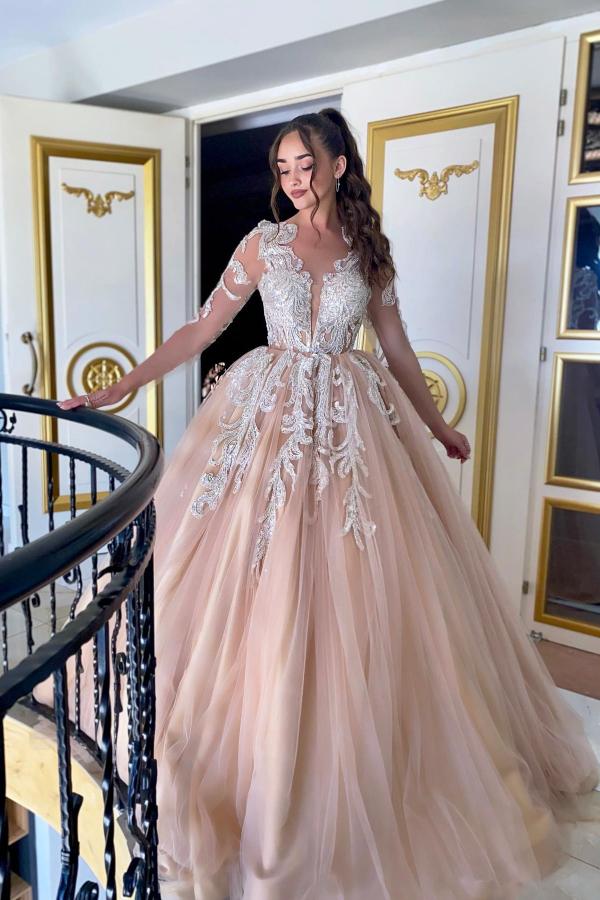
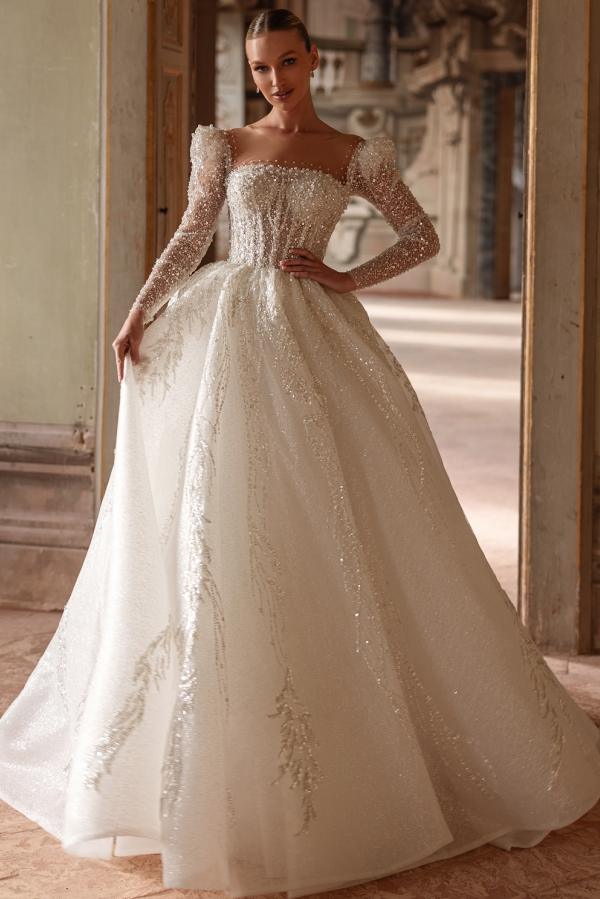
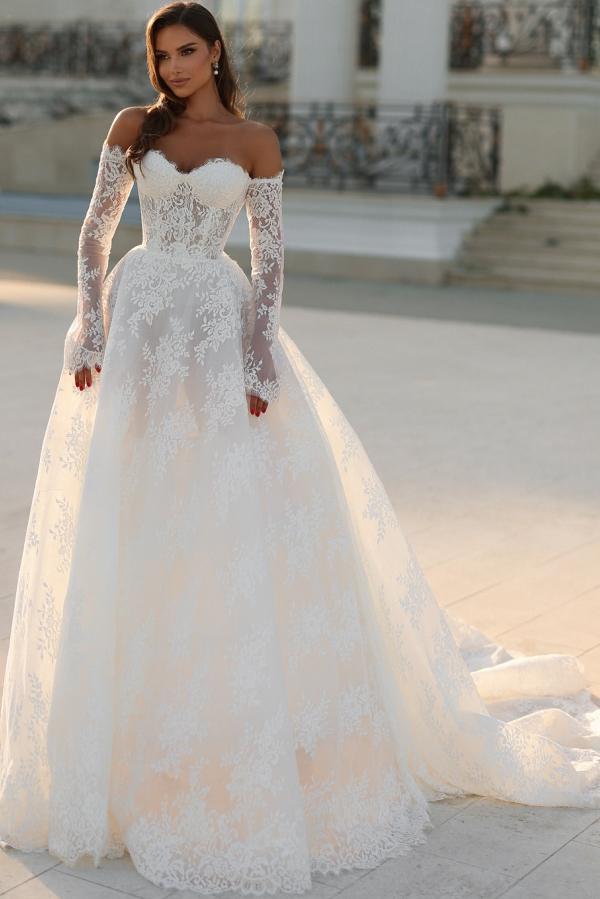
Who actually decides what you can wear?
The parish, in almost every case. That is the single most useful thing to know, because it turns a vague worry into one phone call.
There is no universal dress code
The Church treats marriage as a sacrament celebrated within a liturgy, and the long-standing understanding of matrimony as a sacrament is why the ceremony carries expectations the reception does not. What those expectations look like in practice is set locally.
Ask the parish office, not a forum
One question — is there anything we should know about attire for the ceremony — usually gets a short, specific answer. Forums will give you twenty answers describing twenty different parishes.
Many parishes ask for nothing at all
It is genuinely common to be told there are no requirements. Brides often spend months worrying about a rule that does not exist where they are marrying.
Ask about the whole party while you are there
If shoulders are mentioned, the request usually applies to the bridal party too. Finding that out in one conversation saves repeating the exercise for six bridesmaids later.
Other traditions ask their own questions
Historic chapels, synagogues and mosques each have their own expectations, and they are not interchangeable with a Catholic parish's. If your ceremony is elsewhere, ask that community directly rather than applying anything from this page.
How much sleeve does a church ceremony really need?
Less than the phrase "modest wedding dress" suggests. Coverage at the shoulder is the request; the length of the sleeve below it is yours.
A cap sleeve is usually enough
If the concern is bare shoulders, a cap sleeve resolves it. It changes very little about the silhouette and reads as a design choice rather than a compromise.
Long sleeves in lace are the classic answer
A lace sleeve covers without weight and photographs beautifully in the low, mixed light most churches have. It is also the version that looks right in a cathedral-scale space rather than getting lost in it.
An illusion yoke instead of a sleeve
Fine mesh across the shoulders and chest raises the neckline and covers the shoulder line while leaving the bodice underneath exactly as it was. It is the least visible way to meet a coverage request.
Bateau and square necklines do double duty
Both cover the collarbone naturally, so they satisfy a neckline concern without needing to be described as modest. A bateau neck with a long sleeve is the safest combination in the whole category.
Warmth is a separate question
Stone churches are cold in every season. A lace sleeve adds coverage but almost no warmth, so if the building is cold you want a lined bodice or a wrap, not a longer sleeve.
Can you keep a strapless dress and still cover up?
Yes, and it is usually the better answer, because it lets the ceremony and the reception each have the version of the dress they suit.
A bolero or lace jacket
The simplest solution: worn for the ceremony, removed for photographs and dinner. Match the lace to the dress rather than the colour alone, because two different whites are more obvious than two different laces.
Detachable sleeves
Increasingly common and usually the neatest fit, because they are made for that bodice. Ask whether the style you like offers them before assuming it does not.
A veil worn down
In some parishes a full-length veil worn over the shoulders during the ceremony is accepted as coverage. Worth asking about specifically, because it costs nothing to add.
A capelet or cathedral cape
Longer than a bolero and more dramatic in a large space. It covers the shoulders and the back at once, which is useful if the dress has an open back as well.
Plan the removal, not just the cover
Whatever you add has to come off cleanly in a room without a mirror. Practise it once with whoever will be helping you, and check nothing catches on the veil or the hair.
Decide where it goes afterwards, too. A lace bolero left on a chair at the reception is the one item most likely to be missing at the end of the night.
The Babyonlinewholesale difference: covered gowns as a category, not an exception
Sleeved bridal styles are usually a small corner of a range. On this site they are a category of their own, which changes what is actually available to choose from.
A dedicated sleeved collection
The wedding dresses with sleeves collection is a full range rather than a filter that returns four results. That matters when the sleeve is not negotiable for you.
Lace as the default for coverage
Most of our covered bridal styles use lace or fine tulle for the sleeve rather than solid fabric. That is what keeps a long sleeve from reading as heavy in a summer ceremony.
Detachable trains and overlays
Several styles carry a detachable train, which is the same idea as a removable sleeve applied to the other end of the dress. One gown, two versions of formality.
Silhouettes that suit a long aisle
A church aisle is longer than a hotel one and you walk it slowly. A-line and ball gown shapes hold their line over that distance in a way a very fitted column does not.
Swatches for matching a bolero or veil
If you are adding a cover-up, the shade has to match the gown rather than simply also being white. Our colour swatch range is the quickest way to check that before anything is made, because two different whites are far more obvious in photographs than they are in a mirror.
Shop the Look
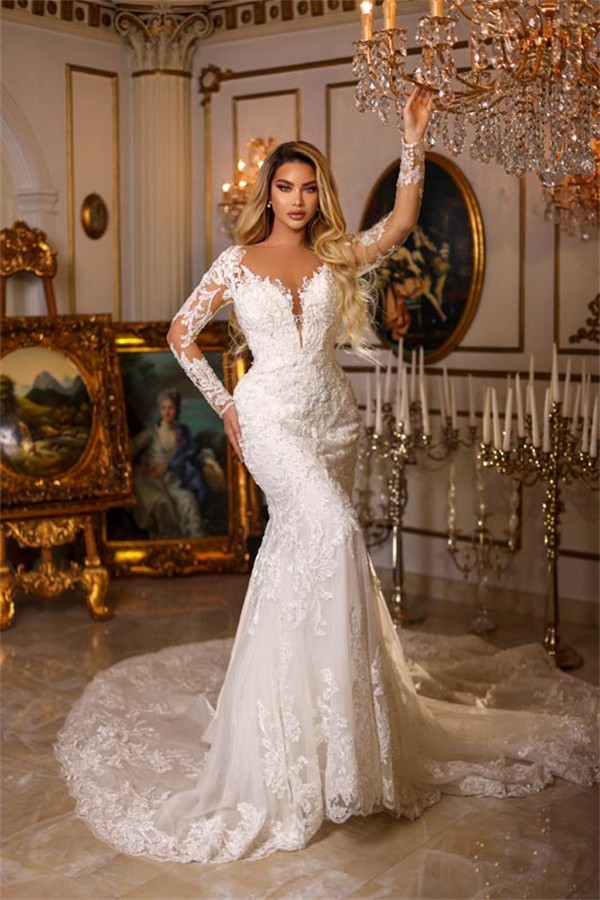
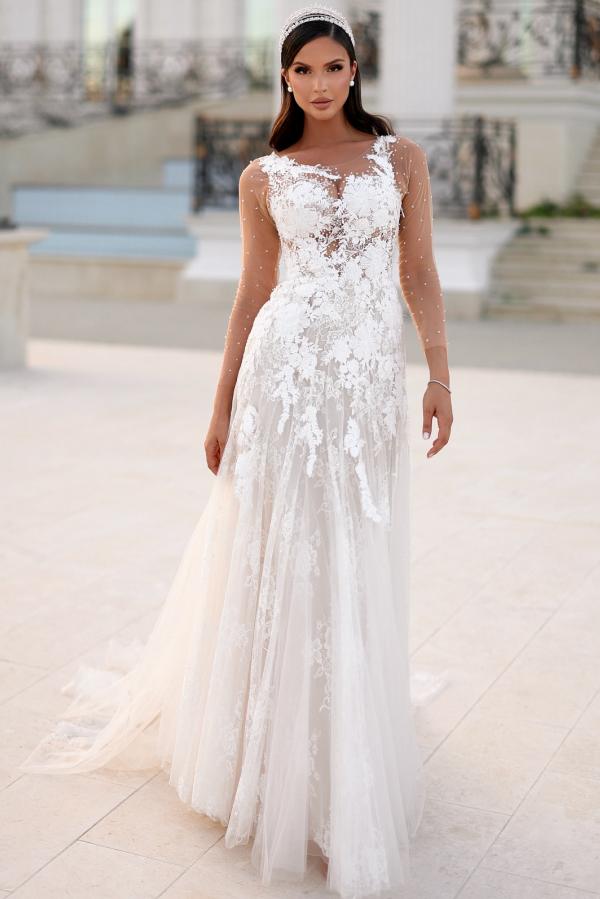
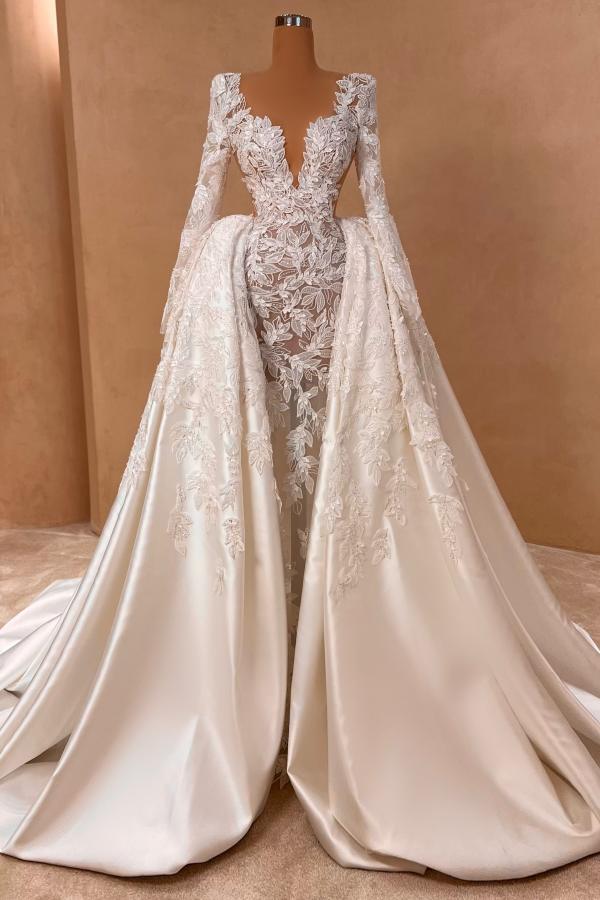
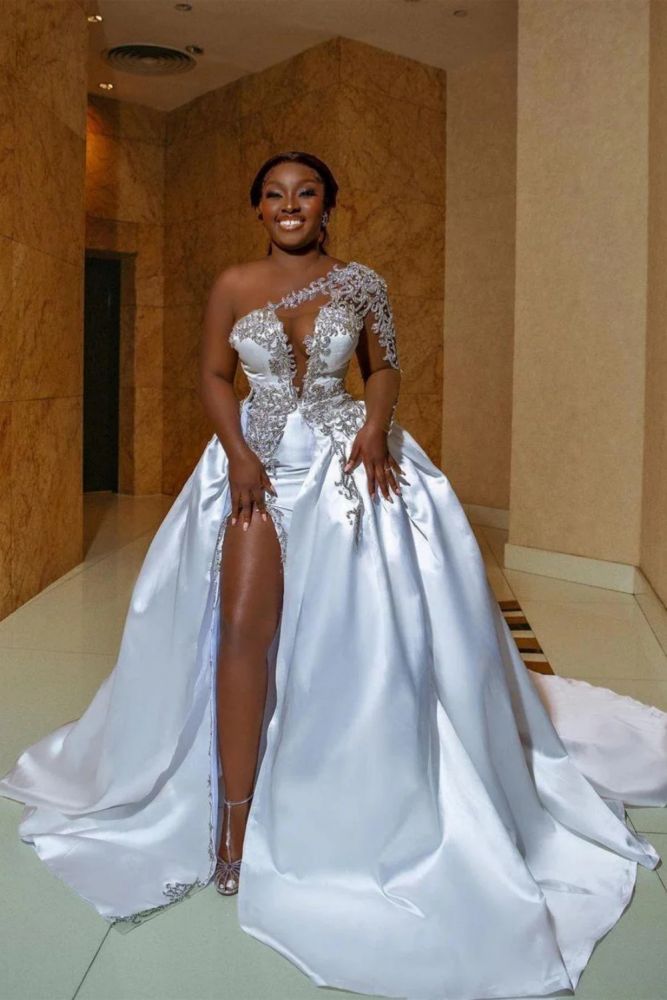
Six covered bridal styles from the lace wedding dress range, ordered from most covered to least.
Exquisite V-Neck Long Sleeves A-Line Lace Tulle Wedding Dress – full lace sleeves on an A-line, the classic church silhouette.
Gorgeous Sweetheart Mermaid Long Sleeves Lace Wedding Dress with Train – a sweetheart neckline made church-ready by the sleeve above it.
Long Sleeves Sheath Wedding Dress with Detachable Train – covered for the ceremony, lighter for the reception once the train comes off.
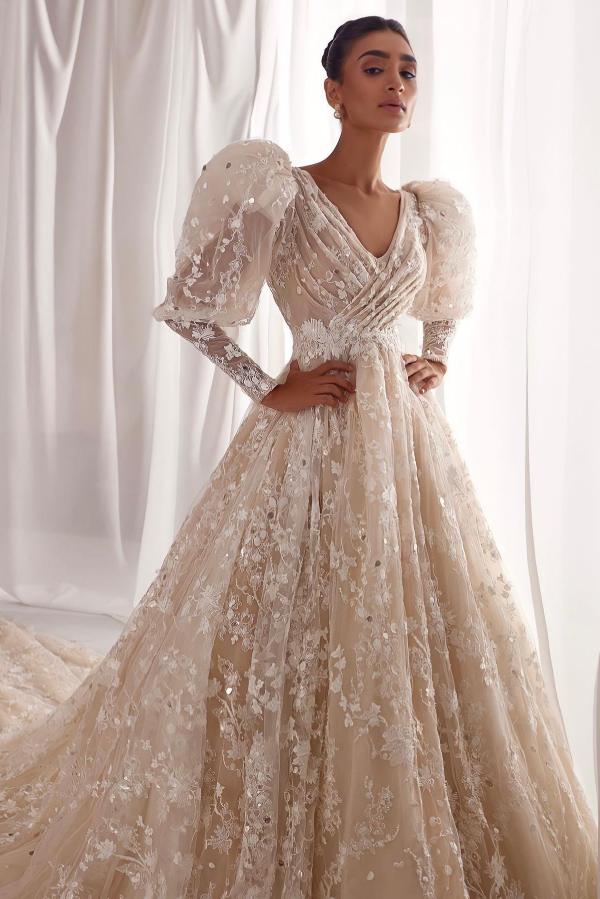

Scoop Neck A-Line Tulle Lace Wedding Dress with Long Sleeves – a scoop neck covers the collarbone without looking high-necked.
V-neck Trumpet Bridal Gown with Detachable Sweep Train and Long Sleeves – trumpet line with a sleeve, for a long aisle and a formal reception.
One Shoulder Satin A-line Wedding Dress with Beading and Front Split – the least covered of the six; pair it with a capelet for the ceremony.
The full range sits on Babyonlinewholesale.com.
Two related reads: the same conversation applies to the bridal party in modest bridesmaid dresses. And if the mothers are asking the same question, boho mother of the bride dresses covers sleeve and hem for a ceremony that moves outdoors afterwards.
Frequently Asked Questions
Does the Catholic Church have a dress code for wedding dresses?
There is no universal rule about sleeve length, neckline or train. Expectations are set locally, so the answer comes from the parish you are marrying in rather than from the Church as a whole.
Can I wear a strapless dress in a Catholic church?
Often yes, and where shoulders are expected to be covered you can add a bolero, capelet or detachable sleeves for the ceremony. The dress itself does not have to change.
Is a cap sleeve enough coverage?
Usually, because the request is about bare shoulders rather than about sleeve length. It also changes very little about the silhouette you originally chose.
Will a long lace sleeve be too warm?
No, lace adds coverage but almost no warmth. Stone churches are cold in every season, so if warmth is the concern you want a lined bodice or a wrap instead.
Where can I find wedding dresses with sleeves for a church ceremony?
Babyonlinewholesale keeps sleeved bridal styles as a full collection rather than a handful of exceptions. Start with the wedding dresses with sleeves range and choose the neckline before the silhouette.
About the Author
Lily is a bridal fashion blogger specializing in wedding dresses, evening gowns and homecoming dresses. She loves decoding fashion trends and offering down-to-earth dress-shopping tips to help women shine on their special days. Her focus is on how sleeve length, neckline and fabric behave in the actual room a ceremony happens in, not just in a product photo.