
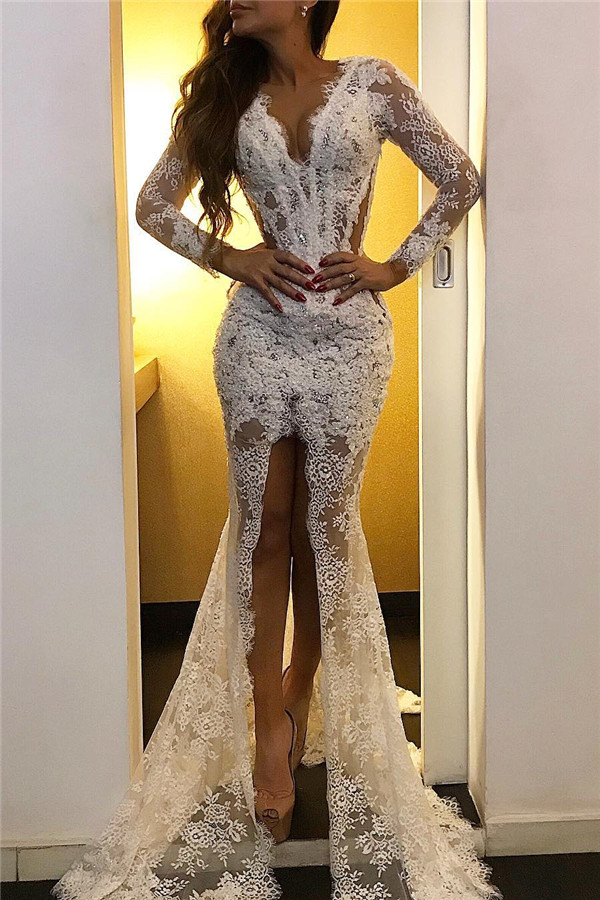
A white evening gown needs more coverage than the same dress in any other colour — not for modesty, but because white is the least forgiving shade under artificial light. Flash and uplighting pass through pale fabric in a way they never do through navy or burgundy.
So the useful question is not how much skin to show. It is how much fabric sits between the light and you, and a sleeve is the easiest place to add it.
That is also why the same white dress can look immaculate in a daylit fitting room and thin in a ballroom. Nothing about the dress changed — the light did.
The table below is the short answer by occasion. The rest of this guide explains what is actually going on.
| Occasion | Coverage that works |
| Gala, black tie | Long sleeve or full lining, floor length |
| Formal dinner, awards night | High neck or one shoulder, opaque skirt |
| Engagement party, rehearsal dinner | Half or three-quarter sleeve, ankle length |
| Someone else's wedding | None — choose another colour entirely |
The rule worth writing down: leave 3-4 weeks between the first fitting and the event for a white gown, because lining changes are the most common alteration and they take longer than a hem.
Why does white behave differently from every other colour?
Because it reflects rather than absorbs. Everything that flatters a dark gown works against a pale one, and it all shows up in photographs before it shows up in a mirror.
Flash goes through it
A single layer of pale satin or chiffon becomes semi-transparent under direct flash. A dark dress in the same weight stays opaque, which is why nobody worries about lining a navy gown.
Every seam and shadow reads louder
White shows construction. Boning channels, seam allowances and the edge of an underlayer are all visible in a way they simply are not in a deeper shade.
Undertone matters more
Pure white, ivory and champagne read very differently against skin. Ivory and champagne are warmer and easier on most complexions; optical white is the hardest of the three to wear well.
Venue lighting shifts them again. Warm tungsten uplighting pulls ivory towards gold, while cool LED washes push optical white towards blue, so the shade you choose on a screen is rarely the shade the room gives you.
It marks
Red wine, makeup transfer and a hand on the waist all show. A sleeve protects the one area most likely to pick up foundation, which is a practical argument as much as an aesthetic one.
Test it before the night, not on it
Stand in front of a window and have someone photograph you with the phone flash on. Whatever shows up there will show up in every professional photograph taken that evening, and it is far easier to fix a week early.
How much sleeve does the occasion actually need?
Sleeve length is the fastest way to move a white gown up or down the formality scale without changing the dress.
Long sleeve for a gala
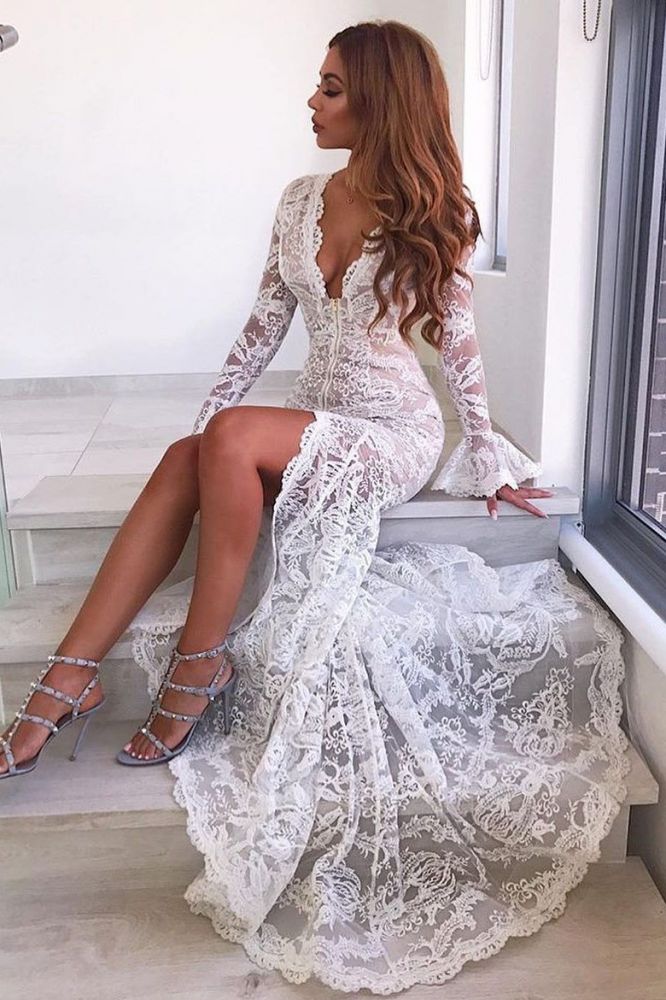
A full sleeve in lace or chiffon reads as the most formal option and solves the flash problem across the arms and shoulders. It is also the version that photographs most consistently across a whole evening.
High neck or one shoulder as an alternative
If a sleeve is not the look you want, coverage can come from the neckline instead. A high neck or a single covered shoulder gives the eye somewhere structured to land.
Half sleeve for a dinner or a rehearsal
Three-quarter and half sleeves sit exactly where most semi-formal evenings want to be. Ankle length with a half sleeve is a genuinely easy outfit that still looks considered.
The one occasion to skip white entirely
Not a wedding you are attending as a guest. Etiquette guidance is unambiguous that guests should avoid white, ivory and cream, and no amount of sleeve or styling makes an exception to that.
The same caution extends to a mostly-white floral print and to all-over white lace, both of which read as bridal from a distance in photographs. If white is the colour you want, save the dress for an occasion where nobody else is wearing it.
Sleeves and temperature are not the same question
A long chiffon or lace sleeve adds almost no warmth — it is a layer of air. If the venue runs cold you need a wrap or a lined bodice, not a longer sleeve, and the two decisions should be made separately.
What makes a white gown look expensive rather than thin?
Three things, and only one of them is the price of the dress.
Lining you cannot see the edge of
A full lining that ends at the same seam as the outer fabric reads as one garment. A lining that stops short leaves a visible line across the thigh under any strong light.
Weight in the skirt
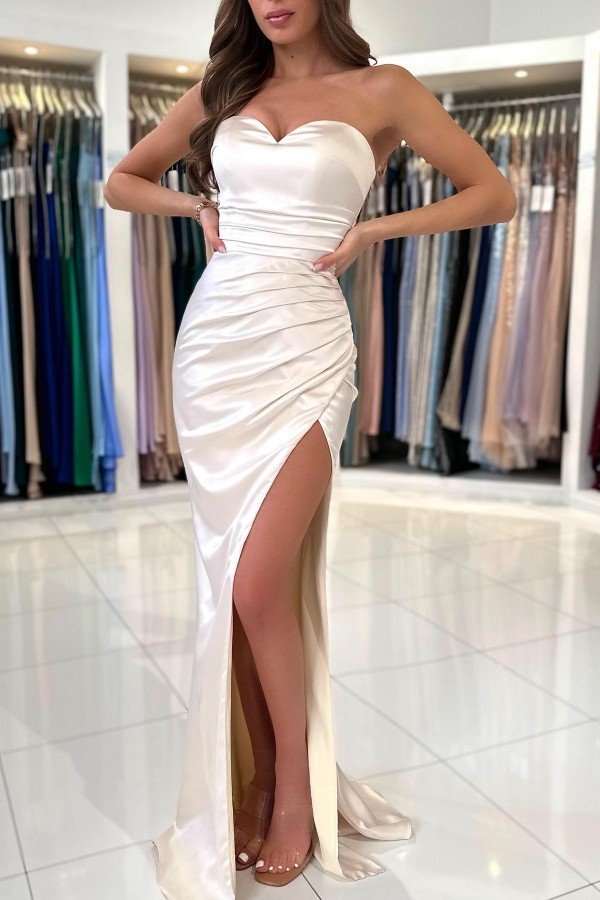
Stretch satin and heavier crepe hang in long clean folds. A very light single-layer skirt clings and shows every foundation garment, which is what people actually mean when they call a white dress cheap-looking.
Texture instead of shine
Lace appliqué, beading and matte crepe break up reflected light. A flat high-shine white surface throws hard highlights that flatten the whole silhouette in photographs.
Underwear planned with the dress
Nude-to-you rather than white is the rule under a pale gown, and seamless everywhere. This one decision fixes more white-dress problems than any alteration.
A hem that clears the floor by a hair
Pale hems pick up marks from the floor faster than dark ones, and the dirt is visible from across a room. Have the hem finished so it just clears the ground in your actual shoes rather than pooling.
A brush or court train is the exception, because it is meant to trail. If you are choosing one, accept that the edge will need cleaning afterwards and pick the fabric accordingly.
The Babyonlinewholesale difference: lining and sleeve treated as choices
White is where a range either takes fabric seriously or does not, so it is a fair place to say what ours actually does.
Stretch satin rather than the thinnest option
A large part of our white and ivory evening range is cut in stretch satin, which is heavier than the lightweight satin usually used at this price. That weight is what stops a pale skirt from clinging.
Sleeved and sleeveless versions of the same line
The same mermaid and A-line shapes appear with long sleeves, with a high neck and sleeveless. You choose coverage after you have chosen the silhouette, which is the right order.
Ivory as a real alternative, not an afterthought
Ivory and champagne run alongside white through the range. If optical white does not suit you, you are not forced out of the look entirely.
Colour swatches before you commit
We keep a colour swatch range for exactly this reason. White, ivory and champagne are impossible to judge from a screen, and seeing the three next to your own skin settles it in a minute.
Shop the Look
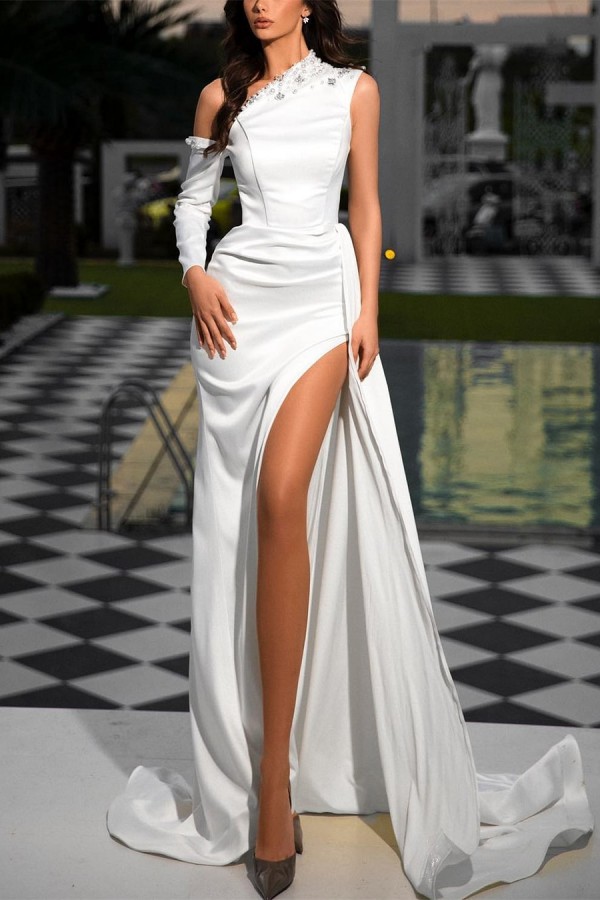
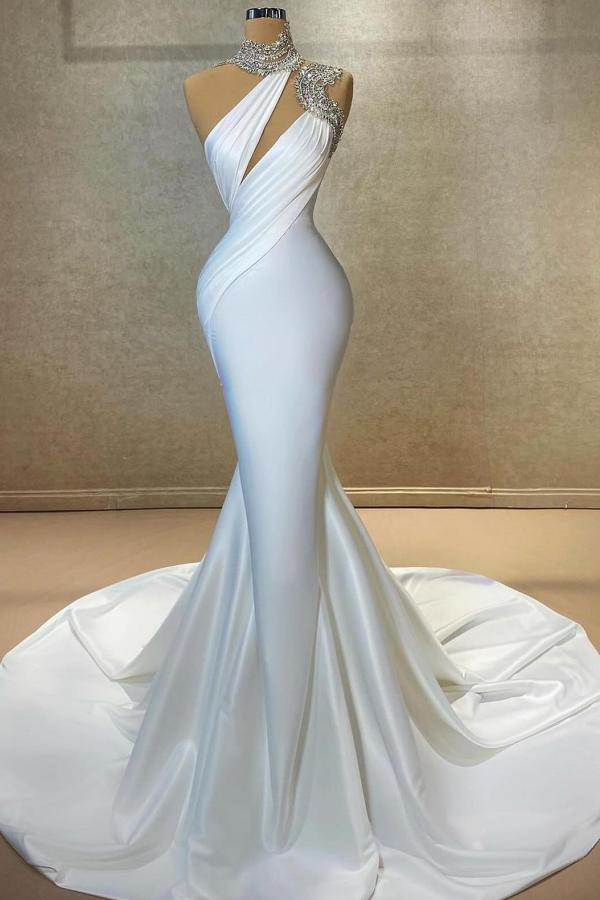
Six white and ivory styles from the evening dresses collection, arranged from most covered to least.
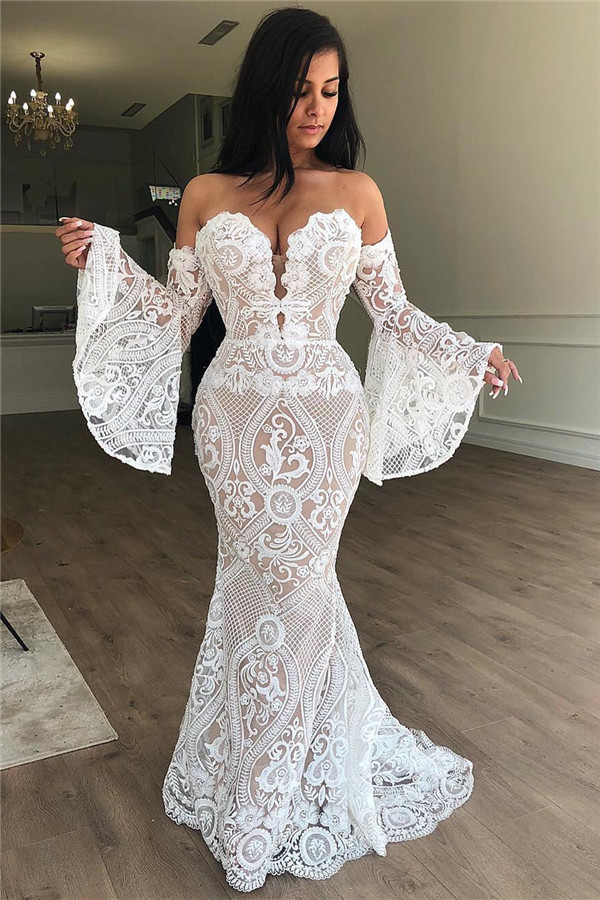
Off-the-Shoulder Long Sleeves Lace Floor-Length Mermaid Evening Dress – lace sleeves that solve the flash problem without adding weight.
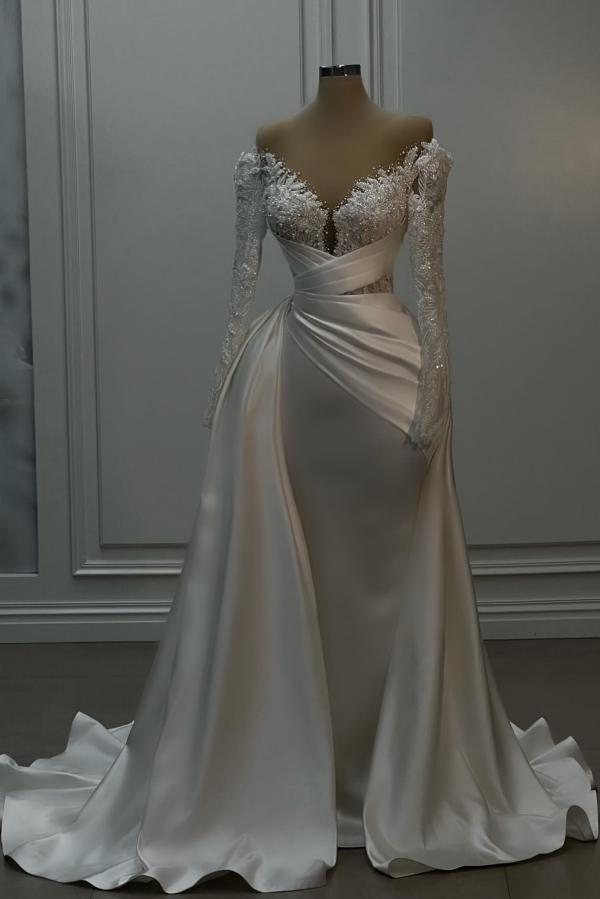
Shiny Long Sleeves White Court Train Evening Dress – full sleeve plus a court train, the most formal reading of white.
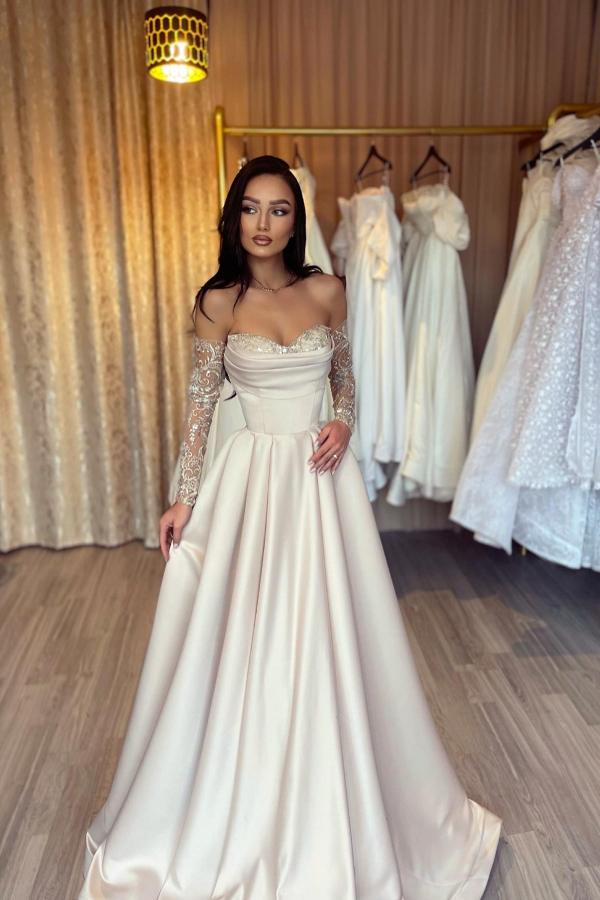
Elegant Sweetheart Lace Ivory Satin A-line Dress with Sleeves – ivory rather than optical white, which is easier against most skin tones.
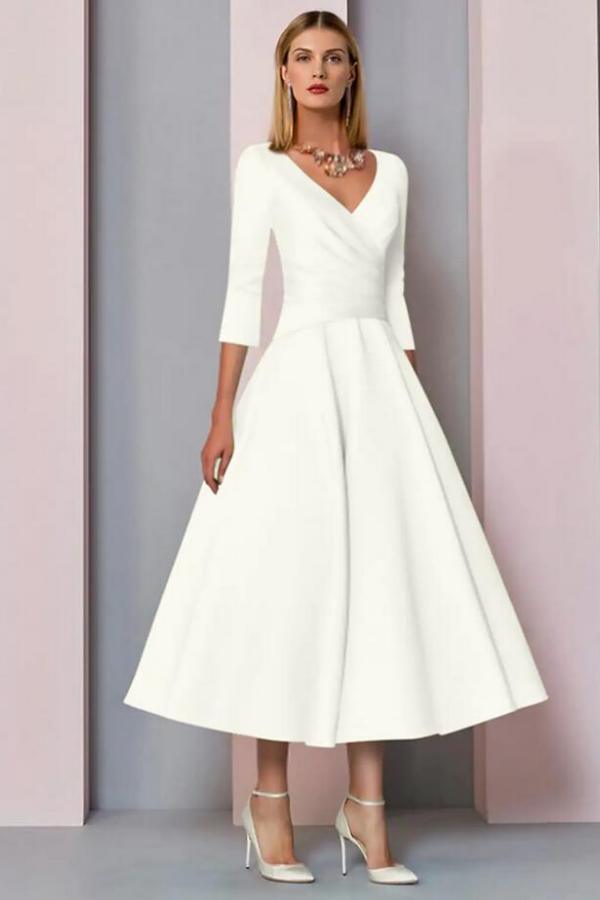
Half Sleeves White Ankle Length V-Neck Satin Dress – ankle length with a half sleeve, the easy semi-formal answer.
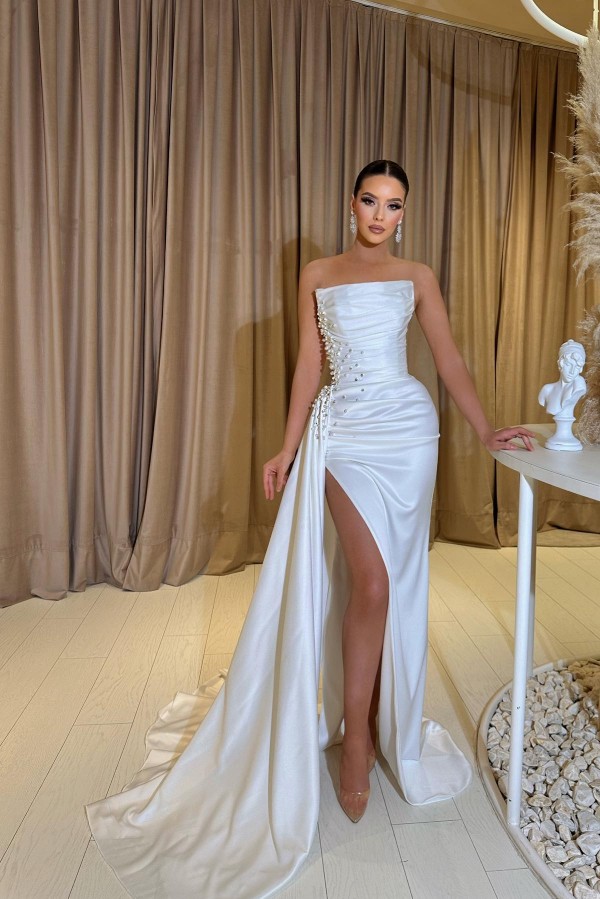
White One Shoulder Asymmetric Satin Dress with Pearls – coverage from the neckline instead of a sleeve.
Deluxe White High Neck Sleeveless Mermaid Satin Dress with Train – a high neck in stretch satin, structured enough to go sleeveless.
The full range sits on Babyonlinewholesale.com.
Two related reads: the same coverage question applies to a whole bridal party in modest bridesmaid dresses. And if you are dressing for an outdoor wedding rather than an evening room, boho mother of the bride dresses works through hem and sleeve for daylight.
Frequently Asked Questions
Can I wear a white evening gown to a wedding?
No, not as a guest. Etiquette guidance is unambiguous that guests should avoid white, ivory and cream, and no amount of sleeve or styling makes an exception to that.
Why does my white dress look see-through in photographs?
A single layer of pale satin or chiffon becomes semi-transparent under direct flash. A dark dress in the same weight stays opaque, which is why lining matters far more in white.
Is ivory easier to wear than white?
For most people, yes. Ivory and champagne are warmer and sit more kindly against a range of complexions, while optical white is the hardest of the three to wear well.
What should I wear underneath?
Nude-to-you rather than white, and seamless everywhere. White underwear is visible through pale fabric in exactly the situations where you would least want it to be.
Where can I find white evening gowns with sleeves?
Babyonlinewholesale carries white and ivory evening styles with long, half and one-shoulder coverage in stretch satin and lace. Start with the elegant evening dresses collection and filter by sleeve length first.
About the Author
Lily is a bridal fashion blogger specializing in wedding dresses, evening gowns and homecoming dresses. She loves decoding fashion trends and offering down-to-earth dress-shopping tips to help women shine on their special days. Her focus is on how sleeve length, fabric and lining change the way a dress reads under real light, not just in a product photo.