

Wedding dresses with covered backs can have opaque fabric, sheer illusion panels, or a combination of both. Start with the back-view photo and identify exactly where the solid fabric ends before deciding whether a dress gives you the coverage you want.
A high front neckline, long sleeves, or a row of buttons cannot answer that question on its own. This guide gives you a practical way to compare the back itself while keeping the rest of your bridal style open.
Key Takeaways
| Check | Why it matters |
|---|---|
| Opaque panel | Fabric over the back may be sheer; check the layer beneath the lace. |
| Top edge and openings | A closed waist does not rule out an open upper back or keyhole. |
| Closure | Buttons, a zipper, or lacing describe fastening rather than coverage. |
| Front, side, and back views | Use all three views to follow the same panel around the bodice. |
What Does a Covered Back Mean for Your Dress?
Decide whether you want fabric or opacity
First, name your goal. You might want no open cutout, solid coverage up to the shoulder blades, or a back that stays opaque all the way to the neckline. Those are different requests, even when a store groups the dresses together.
An illusion back places a sheer layer across the skin and may carry lace motifs or buttons. It can make the design look connected without giving the same opaque coverage as a solid fabric panel.
Write your preference as a sentence: “I want an opaque back above my shoulder blades, with no keyhole.” That gives you a useful filter and makes a question to customer service much more precise.
Follow the solid panel upward
Look at where the opaque skirt meets the waist, then trace the panel toward the upper back. Notice any point where the background changes from solid fabric to skin visible through mesh, lace, or an opening.
A bodice can be solid below the waistline and sheer above it. Another may have an opaque central panel with sheer sides. Compare the smallest covered area with your requirement rather than judging the largest area of fabric.
If the model's hair, veil, or arm hides that boundary, the photo leaves a real question unanswered. Ask for an unobstructed view of the same design before treating it as a match.
Keep shoulder coverage separate
Long sleeves do not establish the height of a dress's back. A gown can cover the arms and still have a low V-back, while a sleeveless gown can carry a solid panel high across the shoulder blades.
Start with the back shape, then choose the sleeve and neckline you like. The wedding dresses with sleeves collection is useful for that second comparison.
If the ceremony has clothing requirements, obtain those directly from the venue. Our guide to wedding dress coverage for a church considers that separate planning question.
Which Details Reveal the Actual Back Coverage?
Look between lace motifs
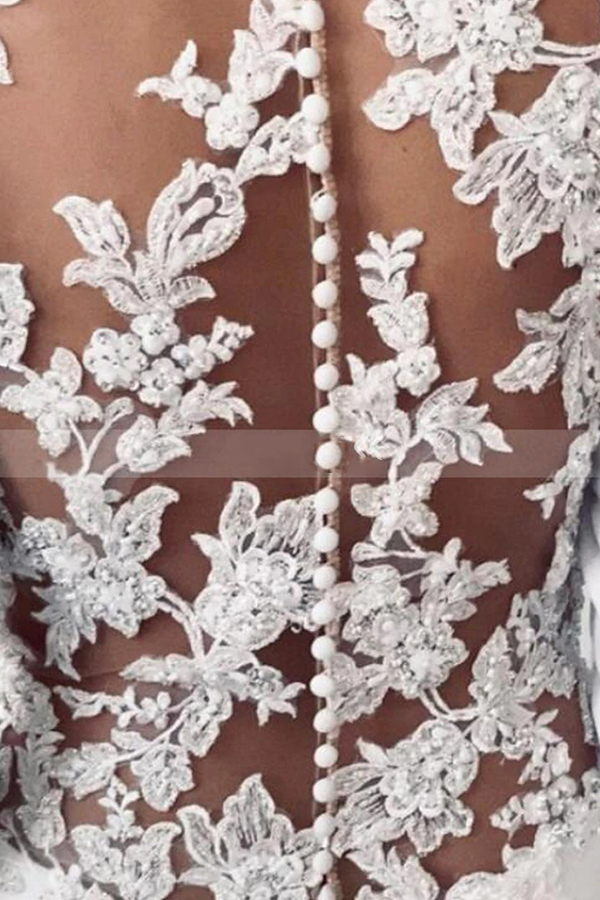
Dense embroidery can look solid in a small product thumbnail. Enlarge the image and inspect the spaces between the motifs, especially at the upper back and beside the waist.
The Smithsonian's National Museum of American History describes lace as openwork. For dress shopping, that means the lace pattern alone cannot establish whether a separate opaque layer sits beneath it.
You can love an illusion design and still distinguish it from a lined back. If opacity is essential, ask which back sections have an opaque underlayer rather than asking only whether the dress is lined.
Find the actual top edge
A line of buttons may travel up a sheer panel to the neck. The buttons are visually prominent, so it is easy to overlook a lower opaque bodice edge behind them.
Identify both edges: the top of the sheer layer and the top of the solid layer. A back can be high in outline while the opaque fabric ends much lower.
Use the same approach with a keyhole. Check where the opening begins and ends and whether its size meets your goal; a small fastening at the neckline does not close the space below it.
Read closures as a separate feature
A zipper joins two edges. It can be sewn into opaque fabric, sheer fabric, or a bodice that changes layers partway up the back.
Likewise, decorative buttons may sit over a zipper, and lace-up edges can leave a gap or have a panel behind them. Neither construction should be assumed from the front photograph.
If the listing says “zipper” and your question is coverage, keep looking. Ask about the panel around the closure and any backing behind it instead of using the fastening label as your answer.
How Can You Build a Reliable Shortlist?
Use a three-view check
For each dress, review three views in order: back, side, then front. Starting at the back keeps an appealing front neckline from deciding the purchase before your main requirement has been checked.
The side view helps reveal whether a back panel continues around the bodice or meets an open side section. The front view then helps you judge whether you like the whole design.
This three-view check is a shopping method, not a guarantee of opacity. If a gallery lacks a useful view, mark that dress “needs clarification” instead of filling in the missing construction yourself.
Keep your comparison notes specific
Record the product name, the highest opaque back edge you can identify, any sheer section, and any opening. A short note such as “upper back appears sheer; waist covered” is more useful than “modest.”
Use “appears” when a photo supports a visual impression but does not show the inner construction. Lighting, overlays, and a lining close to skin color can make a definitive answer difficult.
Then choose the question that remains. You may need the lining boundary confirmed rather than more general style advice or a different sleeve length.
Confirm the exact selection before ordering
Send the product link with your question and identify the pictured version you mean. Ask whether the back coverage shown applies to the color and option you are selecting.
Do not plan on adding a lining, closing a keyhole, or raising the back unless that change has been confirmed for the exact dress. A possible alteration should not become an assumed feature of an online order.
Read the current product information alongside the size guide. Coverage and fit work together, but selecting a larger size does not redesign an open back.
How to Compare Back Designs at Babyonlinewholesale
Start in the satin wedding dresses collection if you like a continuous fabric look. Still inspect the back gallery: the fabric named for the gown does not specify every panel.
The lace wedding dress collection gives you another design direction. Follow the lace and the layer beneath it separately, particularly where the bodice meets the upper back.
Babyonlinewholesale listings can name a closure or give a general lining field without mapping each back section. When those details do not answer your question, ask about the exact location rather than interpreting a broad label as full coverage.
For the front of the same gown, our wedding dress neckline guide can help you describe the shape you prefer. Keep that preference alongside your back requirement so your shortlist satisfies both.
Shop the Look: Compare the Back Before Choosing
These designs include a solid fabric back, mixed panels, and sheer illusion backs. Each card identifies the difference so you can compare it with your own coverage requirement and confirm the current product options.
Solid Fabric Back Gown
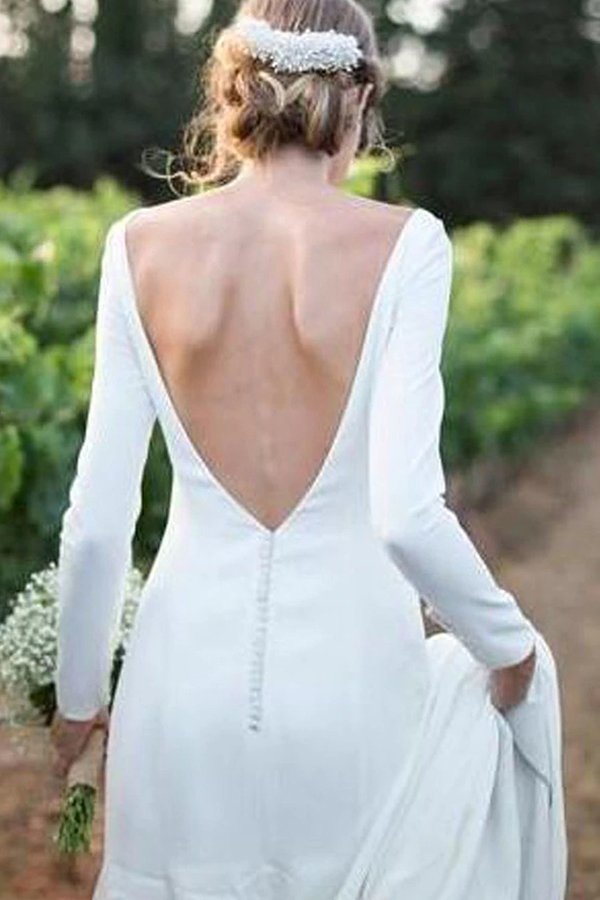
The rear gallery shows a continuous plain fabric back. Use that back view as a solid-panel starting point, then confirm the selected version and the exact coverage you want before ordering.
Mixed Fabric and Lace Back

The back combines broad plain fabric panels with a central lace section. Compare the sections separately and confirm the lace backing if opacity across the entire back is your main requirement.
Illusion Upper Back Gown

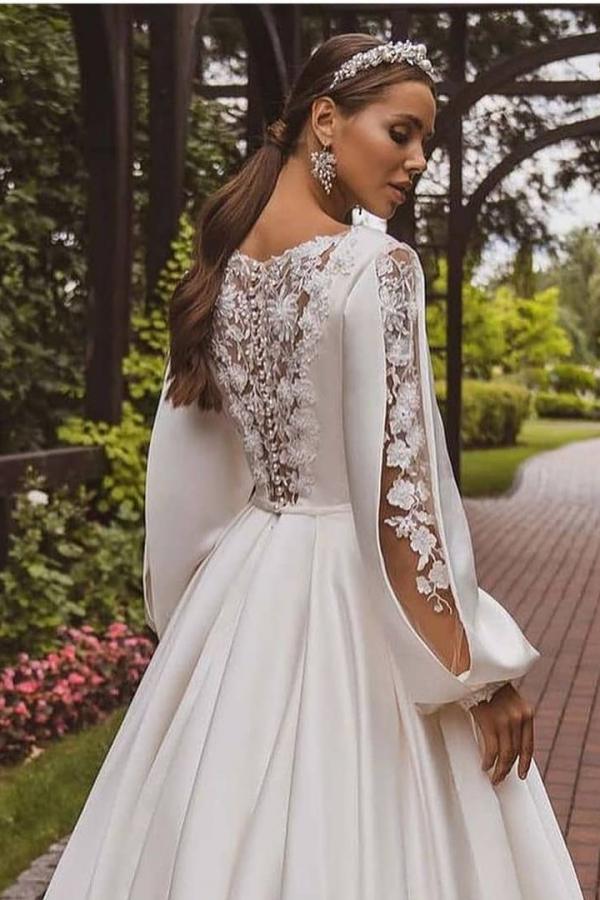
The upper back has a sheer lace appearance above a more solid lower bodice. Consider it for an illusion outline, keeping that upper section separate from the opaque coverage below it.
Buttoned Lace Back Gown
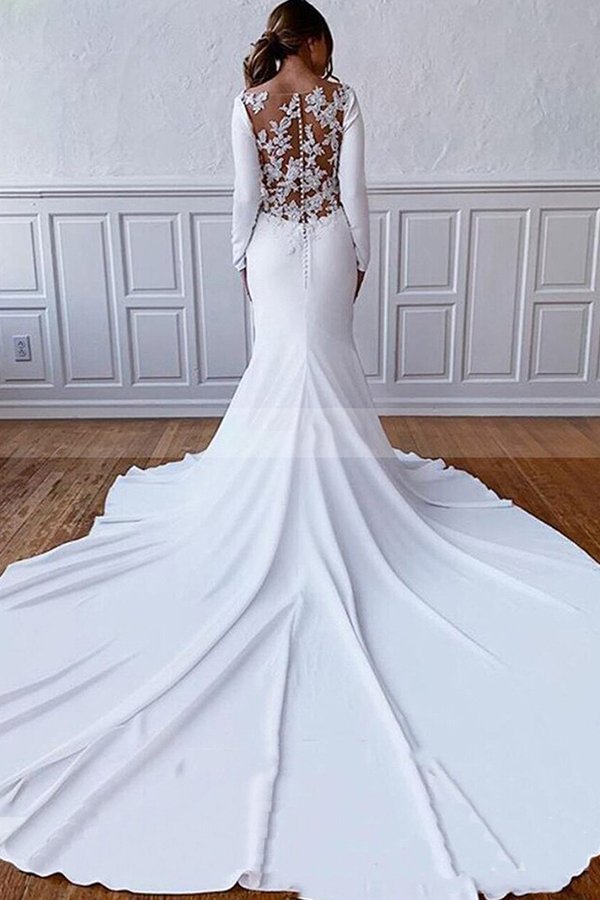
The close back photo shows floral lace and a button line with visible spaces between motifs. The buttons connect the back design while the sheer section remains an important part of its look.
High Lace Back Gown

The high lace back continues to the neck, with skin visible between its motifs. Compare that sheer coverage with the solid fabric option above when deciding what “covered” should mean for your dress.
Frequently Asked Questions
Does a covered back always mean an opaque back?
No, a dress can have sheer fabric across the back and still have a closed outline. Check where the opaque layer ends and whether the upper back remains an illusion panel.
Do long sleeves mean the back is fully covered?
No, sleeve length and back shape are separate design choices. Review the back-view photo even when the arms and front neckline are covered.
Does a zipper confirm that a wedding dress has a solid back?
No, a zipper identifies how the dress fastens. The fabric around it may be opaque, sheer, or divided into different panels.
Can a fully lined dress still have an illusion back?
Yes, a general lining label can coexist with deliberately sheer sections. Ask which parts of the back have an opaque underlayer when the location is unclear.
What should I ask if the back photo is hidden by hair?
Ask for an unobstructed back view of the same design. Include the product link and describe the back area you need to see.
Where can I begin comparing covered-back wedding dresses?
Begin with the satin wedding dresses collection and inspect each back gallery. Compare the opaque panel height, sheer sections, and openings before making your shortlist.
About the Author
Lily is a bridal fashion blogger specializing in wedding dresses, evening gowns and homecoming dresses. She loves decoding fashion trends and offering down‑to‑earth dress‑shopping tips to help women shine on their special days.